Why the Best Solution Isn't Always the First One for Industrial Capital Planning
Industrial capital projects often begin with a clearly defined need but not a clearly defined solution. Owners are frequently required to make investment decisions before everything is fully understood. Front-End Engineering Design (FEED) studies help bridge the gap by providing technical analysis, cost insight, and decision making framework.
The Role of Front-End Engineering in Capital Planning
Capital projects are often initiated to overcome a specific operational challenge. Aging infrastructure, evolving production requirements, and decades of facility modifications often introduce variables that are not fully understood at the beginning of a project.
A FEED study helps avoid the initial tendency to focus on a proposed solution. It helps gather the knowledge required to determine whether a better solution exists. The study is particularly valuable in industrial and manufacturing facilities, where a change to one system affects many others. Equipment upgrades may influence utility demands, structural requirements, maintenance access, and future expansion opportunities.
A Real-World Example
A recent project with a confidential industrial client demonstrates how this approach reduced project costs by increasing efficiency. The effort began when the client decided to replace an electric arc furnace (EAF) and needed to compile information for their corporate capital request process. A study was completed within a 12-week timeframe, including engineering evaluations, detailed scanning, and cost estimates.
While the initial objective was a furnace replacement, the evaluation expanded into a broader review of facility systems and infrastructure. To establish an accurate baseline of existing conditions, the project team completed multiple rounds of 3D scanning and modeling to create a digital representation of the facility. This helped identify opportunities that would have been difficult to uncover through historical drawings alone.
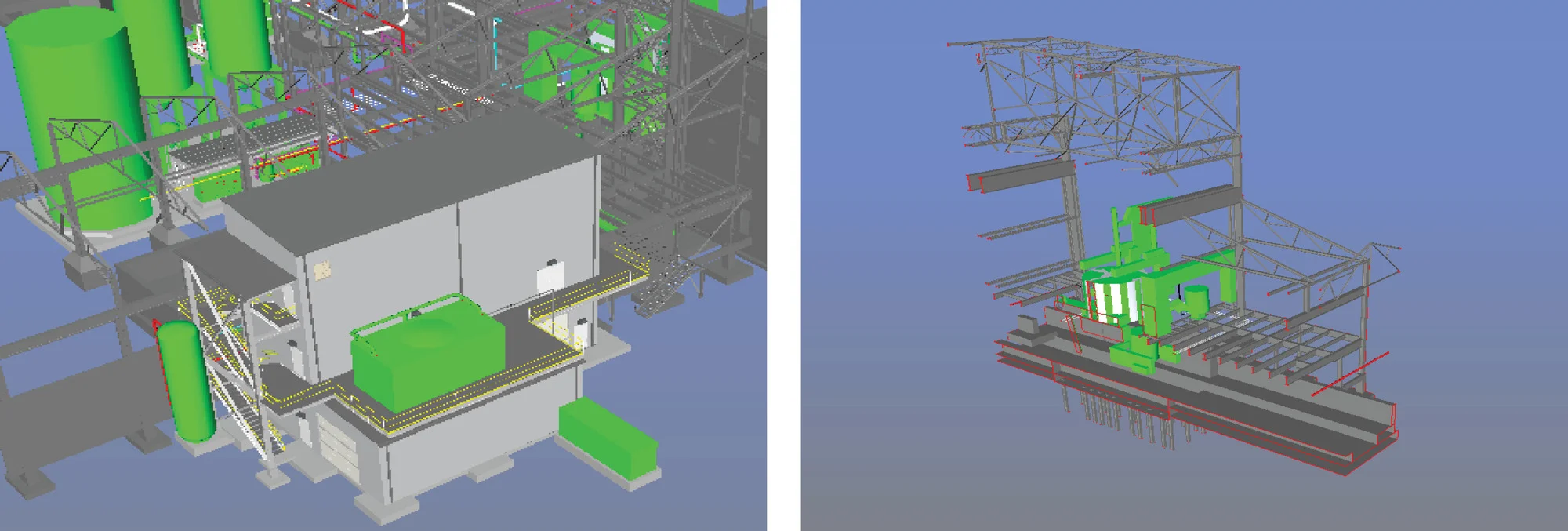
One concept included a new silo and pneumatic conveying system designed to inject limestone directly into the furnace. As the evaluation progressed, the team explored improvements to the existing limestone system. By providing multiple approaches, ISG helped the client evaluate the implications of each option.
Early concepts also included increasing cooling capacity. As furnace technology options were evaluated, cooling requirements changed. By reassessing the existing cooling systems alongside the alternate technology, the team determined that much of the originally planned cooling infrastructure was no longer necessary. This lowered project costs and simplified the overall solution.
To support decision making, the team conducted weekly 3D model walkthroughs with the client. Viewing proposed concepts within a digital model helped stakeholders understand how changes would fit within the facility, evaluate maintenance and operational impacts, and identify concerns that were not apparent during early planning discussions. The feedback gathered during these reviews allowed the study to evolve alongside the client's understanding of the project.
Looking Beyond a Single Piece of Equipment
Decisions rarely affect only one system. ISG approached the project understanding that replacing the furnace was not simply a furnace replacement project. It involved evaluating cooling water capacity, supporting utilities, structural conditions, equipment layouts, material handling systems, and available space throughout the facility.
The project also included a comprehensive structural evaluation of the building. Engineers reviewed existing conditions and developed recommendations. By evaluating the facility as an interconnected system, the project team was able to identify opportunities that supported short-term objectives and long-term operational planning.
Better Information Leads to Better Investments
Industrial facilities are constantly evolving. Equipment ages, production demands shift, technologies improve, and operational priorities change. Successful capital projects require more than a solid design. They require a process that helps owners evaluate options and understand tradeoffs to make an informed investment decision.
FEED studies can do more than support budgeting and approvals. They can uncover opportunities, eliminate unnecessary scope, reduce costs, and help organizations align investments with long-term operational goals.
When approached strategically, the greatest value of a FEED study is the confidence that comes from knowing the solution has been thoroughly evaluated before significant capital is invested.