Protecting Farmland Drainage on Solar Energy Projects
As renewable energy development expands across agricultural landscapes, solar developers face a unique challenge: managing the often-overlooked existing drain tile beneath the sites. Without proactive planning, construction and solar infrastructure can damage private tile systems. The problems often do not appear until after construction, when they show up as on-site flooding, costly remediation and damage to systems that serve neighboring, non-participating landowners.
ISG has worked with solar developers to address these challenges, identifying drainage considerations early in the project lifecycle and developing solutions that support renewable energy production and the long-term viability of surrounding agricultural land.
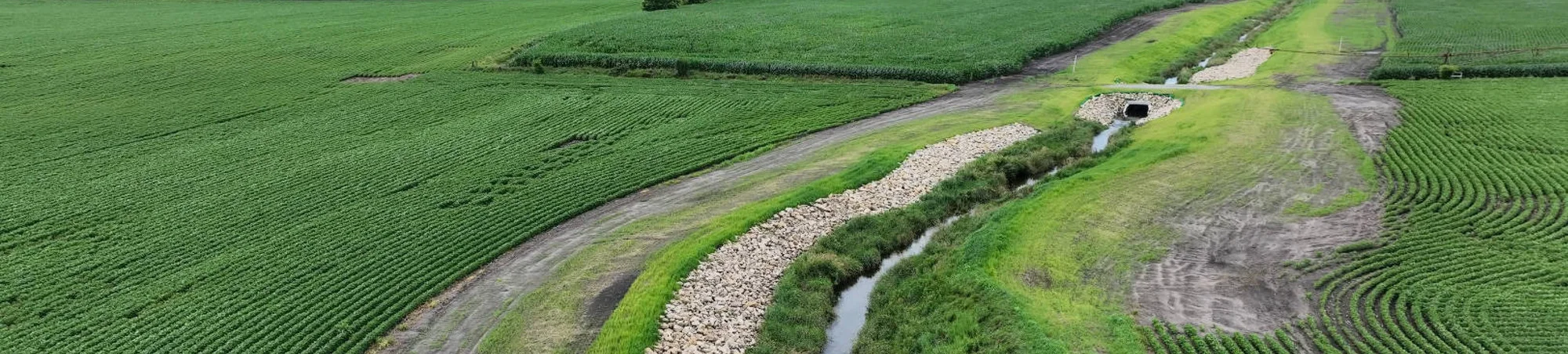
One solar developer had previously experienced challenges on project sites where private drain tile systems had not been fully considered during early planning, which slowed down project approval and caused flooding issues on their property and adjacent properties. In subsequent projects, they reached out to ISG early to leverage our agricultural drainage expertise. ISG completed an extensive investigation of existing site drainage and a comprehensive remediation plan for the client’s on-site drain tile.

That work showed why solar sites need a different approach than typical farm drainage projects. Unlike traditional agricultural drainage projects, solar developments introduce additional infrastructure, permitting requirements, and landowner considerations that can complicate otherwise straightforward drainage solutions.
Some of the unique challenges include:
Limited Access To Existing Drainage Pathways
Solar infrastructure, including panel arrays and associated facilities, can restrict access to traditional drainage routes and limit opportunities for conventional tile installation or repair.
Impacts Beyond Project Boundaries
Existing tile systems may extend upstream or downstream of a solar site onto properties owned by non-participating landowners. Maintaining these systems can be challenging, particularly when landowners have concerns or opposition related to solar development.
More Complex Permitting Requirements
Solar developers often face additional permitting considerations for drain tile work. Activities such as replacing outlets or modifying existing drainage infrastructure may require additional coordination and approvals, making it important to identify potential issues early.
Effective drainage planning looks beyond construction to the full life of a solar project. ISG's goal is to maintain or improve existing drainage wherever possible, protecting neighboring farmland and keeping the project site functioning well over time. That planning should also anticipate decommissioning. By addressing tile systems and drainage patterns early, developers help preserve the site's ability to return to productive agricultural use when the project ends.
As solar development increasingly overlaps with working farmland, understanding how energy infrastructure affects drainage and local watersheds matters more than ever. ISG helps developers navigate unique site conditions and build practical solutions that meet immediate construction needs and support long-term land use.
Blog Author

Logan Mahoney
Graduate Engineer
Logan.Mahoney@ISGInc.com
952.426.0699