2026 Western Energy Institute (WEI) Joint Use Conference Takeaways
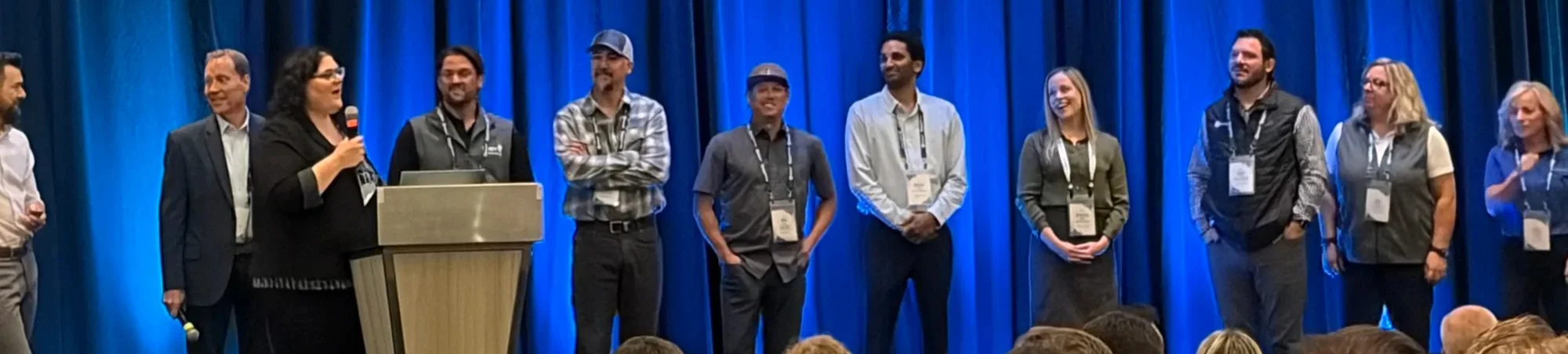
The 2026 WEI Joint Use Conference in Minneapolis, Minnesota brought utilities, pole owners, attachers, broadband and fiber providers, and other joint use stakeholders together to discuss safety, operations, and efficient use of shared infrastructure. Read on for business unit leader Leila Hussein’s key takeaways from the conference.
1. Attachment Quantities are Increasing
With broadband deployment accelerating across the nation, pole attachments are receiving increased state and federal funding to connect underserved locations. Federal, state, and additional private funding sources are supporting the current surge in fiber, wireless, satellite, and other network deployments, encouraging pole owners to add more attachments.
As attachment quantities increase, pole owners are faced with new challenges meeting tight timelines and following stringent attachment rules. Each attacher has different resources and constraints, making it difficult for pole owners to manage projects with multiple attachers working on the same pole line or align projects across a pole owner’s geography.
2. Correcting Post-Construction Inspection Violations
Pole owners continue to struggle with encountering violations found during post-construction inspections. With quantities of joint-use pole attachment requests skyrocketing, attachers are primarily focused on deployment to keep up with demand, leaving less time to return to poles, identify incomplete requirements, or amend installation errors. However, pole owners are tasked with providing safe and reliable power to all customers, and violations need to be corrected quickly.
ISG has found that a strong program of measurement and analysis with metrics and a scorecard offer a solution for effectively tracking results, helping attachers easily identify which violations need to be corrected. Pole owners have found this method to drive effective results, reducing risks when providing power. Attachers are using this data as a tool to measure build results, driving proactivity during installation and in future build outs.
3. New Rules Change Cost and Timeline Conversations
Looking to increase high-speed infrastructure across the United States, the Federal Communications Commission (FCC) approved updates to its pole attachment rules from 2022 to 2026. These new FCC rulings require that pole owners delineate between pre-existing conditions and what pole owners can hold new attachers responsible for in those costs and conditions. This summer, the FCC further clarified that under certain conditions, pole owners can only charge new attachers the incremental cost difference rather than the complete make-ready cost.
The latest FCC rulings have also defined project sizes to include mid-size orders and large order tiers. To continue expediting broadband deployment, these tiers are factored into the timeline allotted for deployments. The FCC further encourages attachers to provide advance notice and meet and confer requirements to access a shorter timeline. The new rulings balance the need for proactive communication, offering additional time to complete requirements when there are many poles.
The FCC continues to support the telecommunications industry by aiming to mitigate tight pole attachment schedules by requiring telecommunications providers to issue project notices to pole owners earlier in advance. When project notices are issued early, new FCC rules shorten the timeline for surveys, cost estimates, and make-ready work. Additionally, pole owners and attachers can begin coordination sooner, reducing deployment delays.
4. Telecom Providers, Pole Owners, and Attachers are Collaborating on Common Goals
Although telecommunications providers, pole owners, and attachers are navigating new rule interpretations, conferences like the WEI Joint Use Conference and changing attitudes about shared infrastructure are bridging communication gaps. As joint use pole attachments increase, managing risks such as downed poles, injuries, and wildfires has become critical. Pole owners and attachers are stakeholders in ensuring safe and functional poles that serve providers and users.
Narratives are moving toward analyzing how best to help attachers complete effective, safe, and timely work. Conferences open communication and prompt stakeholders to network, learn new perspectives, and focus on real world problems and solutions.

.webp)
.webp)
.webp)
.webp)

Related Articles


Community Development Plans: Strengthening the Foundation for Deeper Connections
For a community to evolve into a quality place to live, work, and explore, it starts with a vision. ISG's Planning Group helps bring visions to reality through a strategic process that results in an actionable, and holistic plan, also known as a Community Development Plan (Plan).