Adaptive Lake Management For Data-Driven Lake Health
Effective lake management requires an approach that recognizes each lake as a unique system shaped by watershed inputs, internal processes, and human impacts. Questions about water clarity, aquatic vegetation, invasive species, and recreational suitability are ultimately questions about ecology, nutrients, and sustainability.
ISG provides comprehensive lake management services that support informed decision‑making through an adaptive framework: Assess, Plan, Implement, and Monitor. By integrating field data, modeling, and stakeholder coordination, ISG helps communities develop practical, defensible strategies that lead to measurable water quality outcomes.
Defining A Clean Path Forward
Lake management starts with a shared vision. Goal setting links community values with technical decision‑making by defining desired outcomes, feasibility given lake potential, and how to measure progress. ISG works with lake associations, local governments, and stakeholders to establish clear, realistic goals that address immediate concerns and long‑term lake health.
Through the adaptive management framework, ISG helps translates priorities and goals into action. Goals are organized around key management themes such as water quality, aquatic plants, shorelands, fisheries, recreation, and communication. Each goal is supported by measurable objectives and defined actions that identify responsibilities, timelines, and resource needs. This structure keeps data collection, modeling, implementation, and monitoring aligned and adaptable as conditions change.
Assess: Establishing Baseline Conditions
Understanding your lake begins with building a dataset that informs what the lake’s current condition is. Data collection efforts can be costly and take time. Therefore, it is important to align data collection efforts with lake management goals to collect the right data while accounting for limited funds and resources. As a starting point, ISG assesses existing datasets to determine where gaps exist to inform data collection efforts, such as water quality monitoring and aquatic plant surveys. Conducting aquatic plant surveys and point‑intercept surveys helps document species composition, abundance, and spatial distribution of native and invasive aquatic vegetation. These repeatable datasets establish benchmarks used to track change over time, evaluate management effectiveness, and support regulatory coordination.
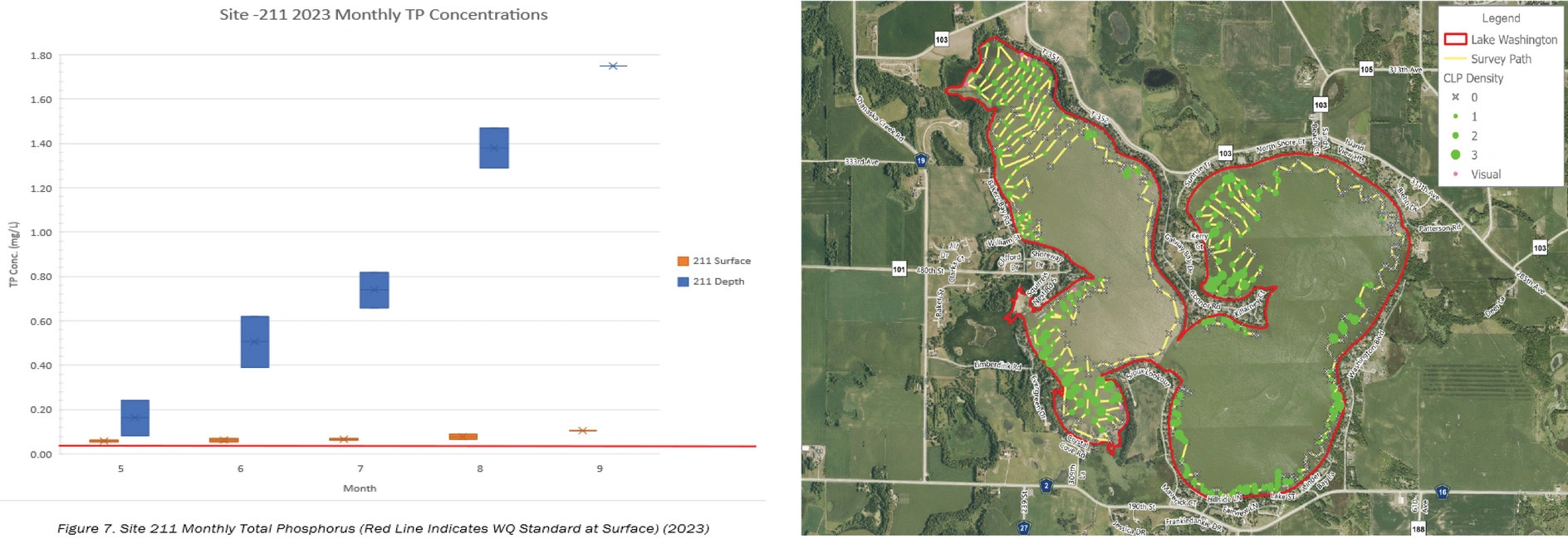
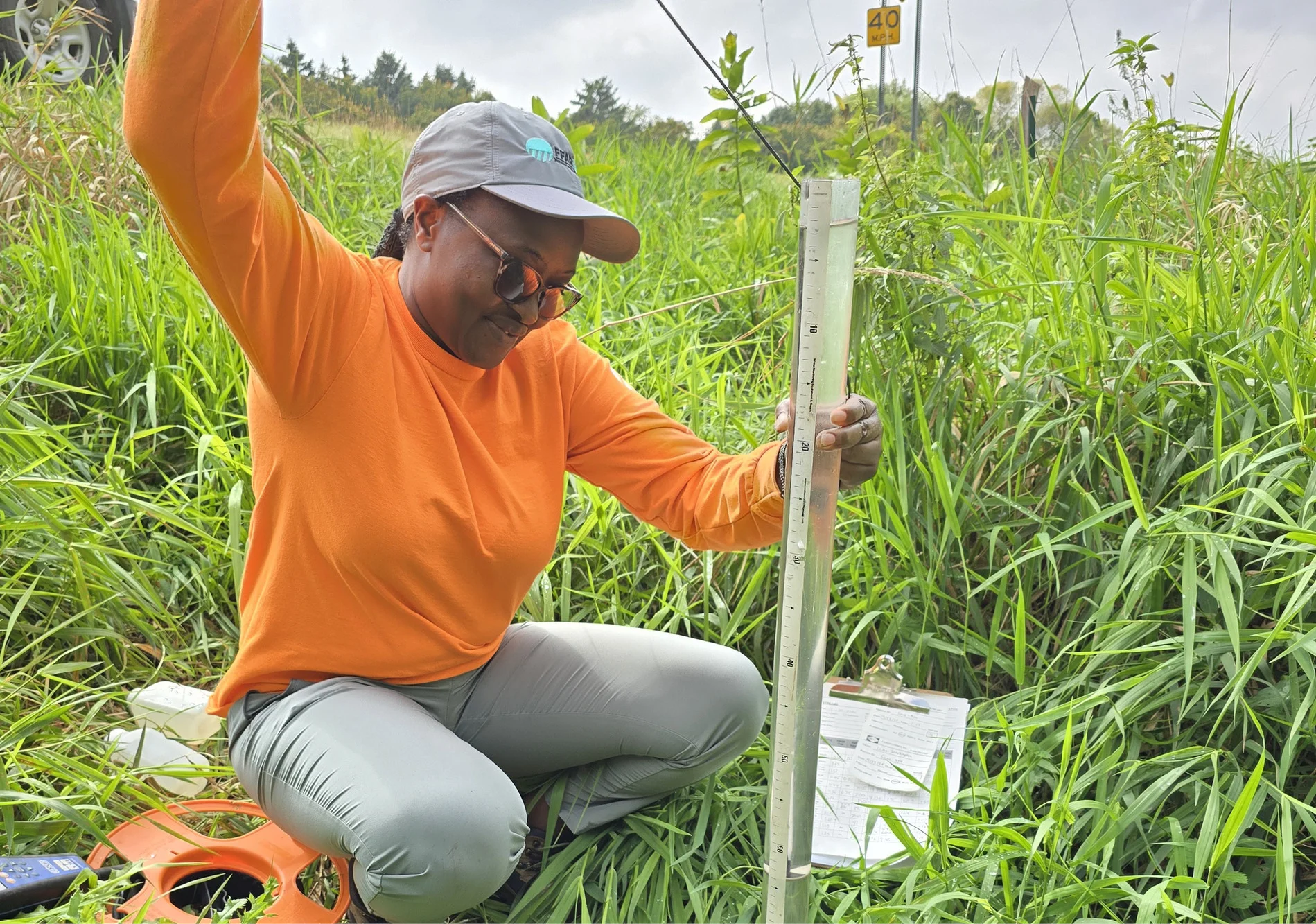
Water quality monitoring and sampling are tailored to lake morphology, hydrologic connectivity, and project goals. Monitoring programs are designed to capture seasonal and interannual variability in physical, chemical, and biological parameters. For Lake Washington in southern Minnesota, ISG coordinated monitoring at in‑lake stations, tributary inlets, and the lake outlet to characterize nutrient behavior across the lake‑watershed system to synthesize historical data, watershed studies, and regulatory frameworks into a comprehensive management plan with defined nutrient reduction targets, building a dataset across multiple years at the same sites.
Plan: Converting Data Into Action
Assessment data becomes meaningful when translated into a clear plan of action that considers in-lake and watershed management needs and opportunities. Our planning aligns technical findings with regulatory requirements, funding opportunities, and implementation feasibility. To accomplish this, ISG reviews findings of baseline conditions assessment, new data collection, and watershed data resources to develop a comprehensive management plan. Lake water quality modeling is developed from this data to quantify how a lake is anticipated to respond to planned actions. This process leads to aggressive, but realistic, plans that translate to implementation actions, ensuring your lake management plan does not just sit on the shelf. Additionally, a lake management plan also serves as key communication tool for lake groups to share lake management goals and progress with stakeholders.
Implement: Restoration Design + Permitting
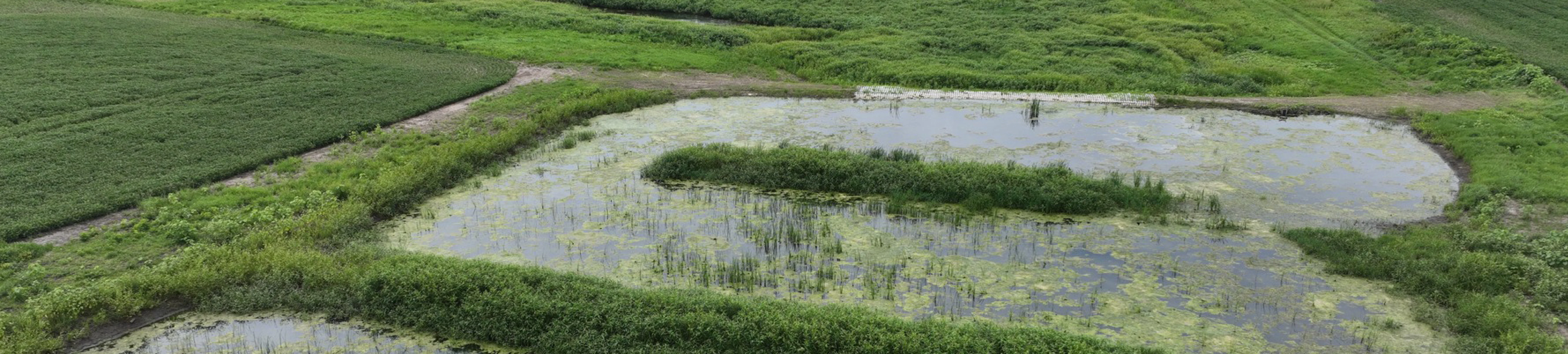
ISG supports implementation by providing technical documentation for management activities and engineered design plans, all of which are regulatory‑ready deliverables. ISG provides shoreline restoration planning and designs, watershed best management practice siting and design, in-lake treatment approaches, and completes delineation surveys for Invasive Aquatic Plant Management (IAPM) permits, documenting the extent of invasive species to support selective management strategies while minimizing impacts to native plant communities. Based on assessment and modeling results, restoration recommendations are developed and may include watershed best management practices, in‑lake treatments, habitat improvements, or phased restoration strategies aligned with project goals.
Monitor: Adaptive Management
Long-term lake health requires ongoing monitoring and the ability to adjust strategies as conditions change. ISG develops a clear monitoring plan at the start of a project that defines where samples are collected, what is measured, and how the data will be used over time. This consistent approach allows communities to evaluate what is working and make informed decisions in the future.
Ready to talk about your lake? Get in touch.