Designing Beyond the Next Phase
Athletics are a defining part of campus life at Dordt University. With record enrollment growth since 2022 and approximately 45% of undergraduates competing as student-athletes, the demands placed on athletic facilities have grown significantly. Supporting that level of participation requires more than incremental facility improvements, it requires long-term, intentional recreation facility design thinking.
That belief shaped the multi-phase transformation of the Rozenboom Family Athletic Center, a donor-funded renovation and addition guided by a design-first approach and a long-standing partnership between Dordt University and ISG.
From a Targeted Need to a Long-Term Vision
The design partnership began around a shared goal to enhance student-athlete safety and performance within the main competition gym. Built in 1967, the facility had evolved through additions over decades, creating crowded conditions that no longer matched the scale of Dordt’s athletic program or the expectations of student-athletes and fans.
Early conversations, including engagement with athletic leadership, coaches, and key stakeholders, revealed a broader set of needs and opportunities:
- Growing rosters and expanded coaching and support staff
- A need to improve court safety conditions
- Limited locker rooms, training, recovery, and associated academic spaces
- A desire to improve the fan and spectator experience
- Donor-driven funding that required flexibility over time
What emerged was a shared understanding: the university needed a comprehensive vision, even if the work itself had to be accomplished in stages.
Leading with Design Before Phasing
Rather than defining phases first, ISG worked alongside Dordt to clarify the end state: how the athletic center should function, feel, and contribute to campus life once fully realized. That design-first strategy informed decisions around needs and opportunities to elevate user experience, structure, adjacencies, and long-term flexibility before individual phases were scoped.
Visualization became a critical tool throughout this process. Renderings, fly-throughs, and phased diagrams helped Dordt’s leadership and advancement team communicate the vision to donors and campus partners, reinforcing confidence that each phase was part of a unified whole.
Equally important, the approach allowed the facility to remain fully operational during construction, preserving game schedules, daily training, and campus use while improvements moved forward.
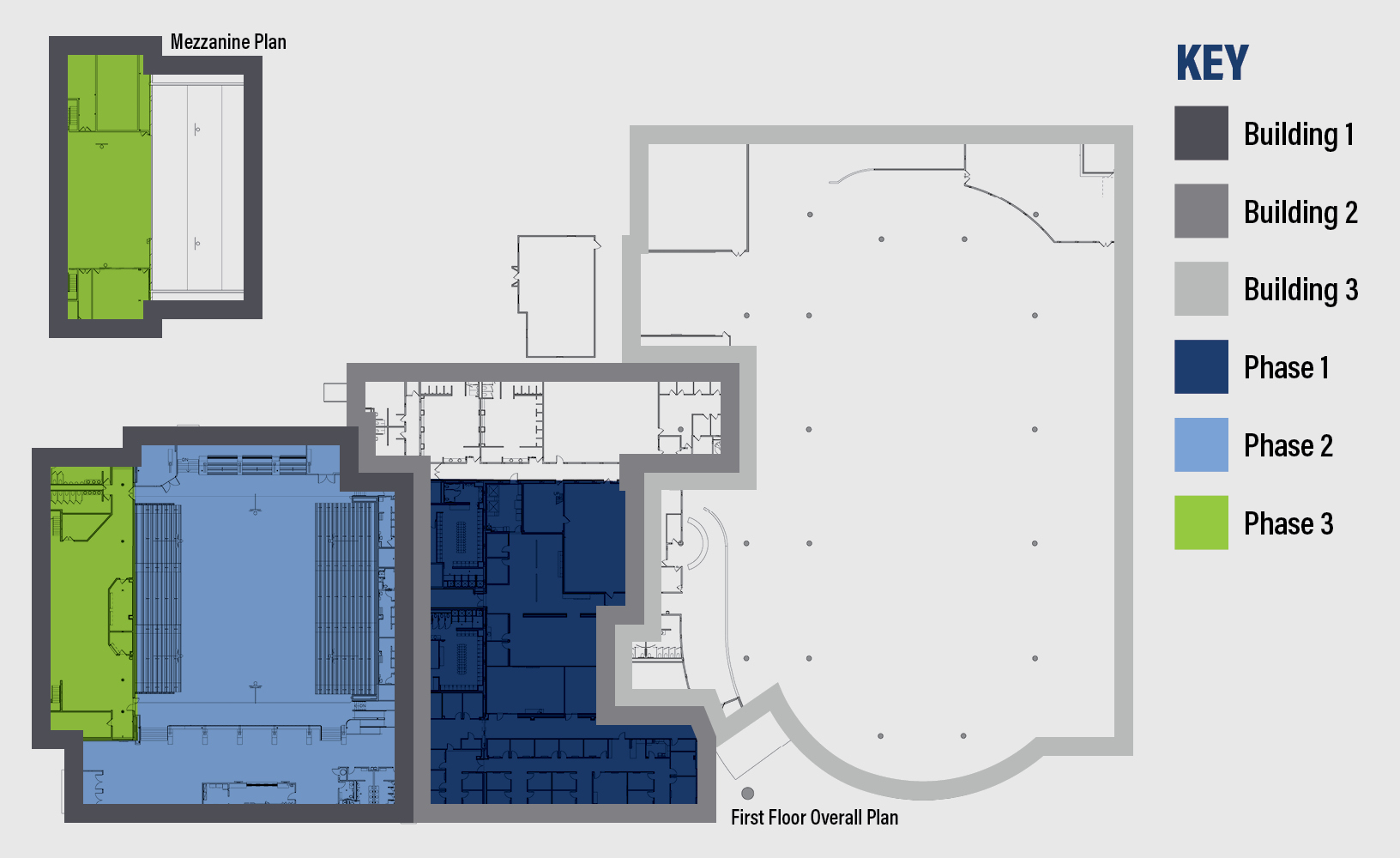
One Vision, Three Phases
Each phase was carefully defined to deliver complete, functional spaces without leaving partially finished conditions, while balancing cost, constructability, and impact.
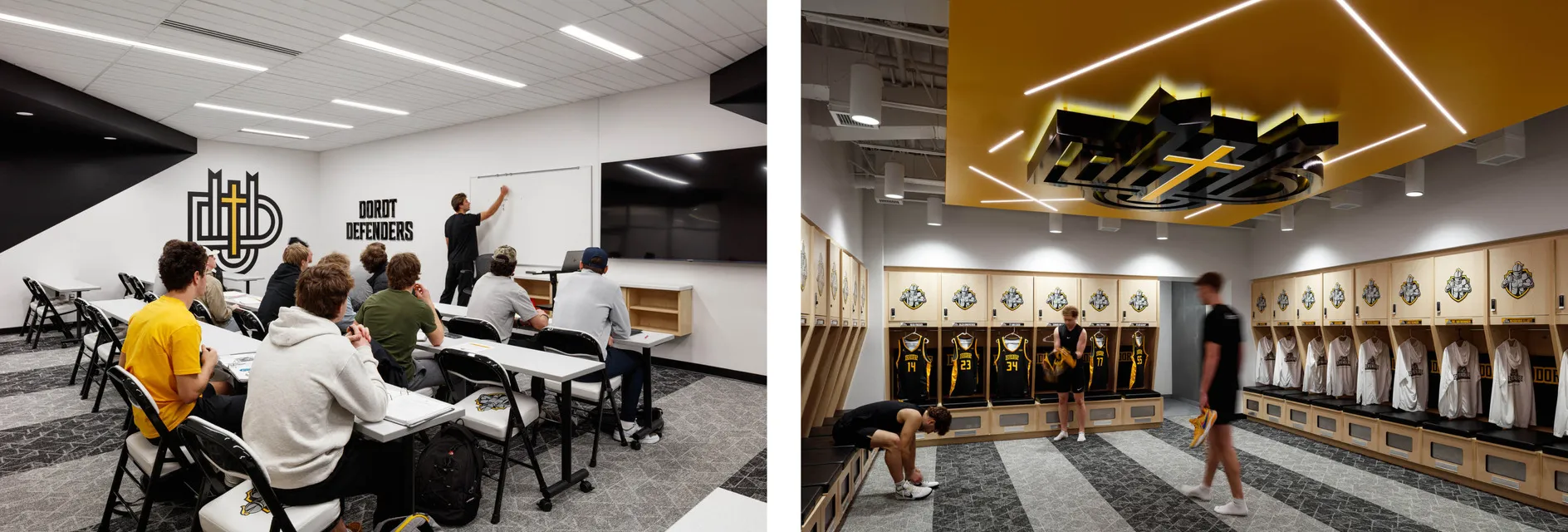
Phase 1 focused on core student-athlete needs, introducing renovated locker rooms, modern athletic training and recovery spaces, classrooms, and new athletic department offices. These updates addressed immediate performance and wellness priorities while supporting Dordt’s growing athletic staff department.
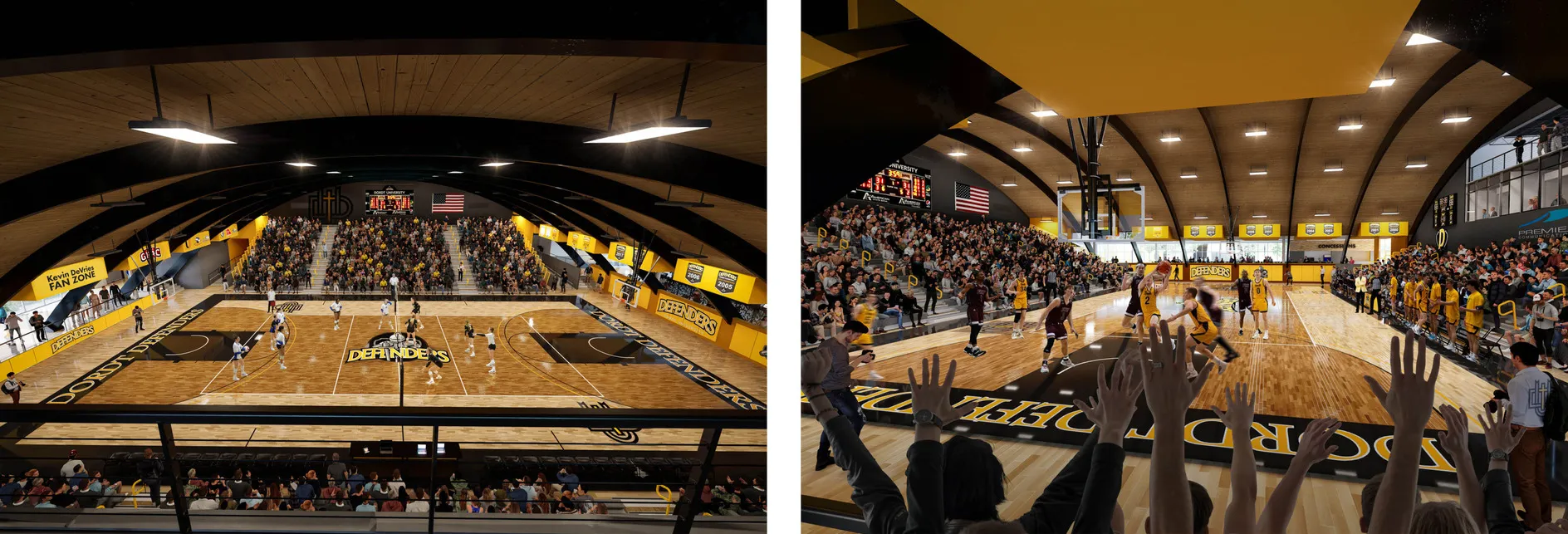
Phase 2 returned to the original driver of the project: safety within the competition gym. Expanding run-off zones required lengthening the building, but that move also unlocked broader benefits. New north and south concourses improved circulation, relieved crowding, and created opportunities for concessions, restrooms, and upgraded audiovisual systems. The design brought fans closer to the action without interfering with play, creating unique elevating viewing, while preserving the gym’s iconic barrel-vaulted wood roof, a defining feature beloved by the campus community.
Phase 3 is planned for the future, and will expand on this work with additional locker rooms, hospitality and event spaces, media production areas, and architectural enhancements that further elevate the facility’s presence and usability.
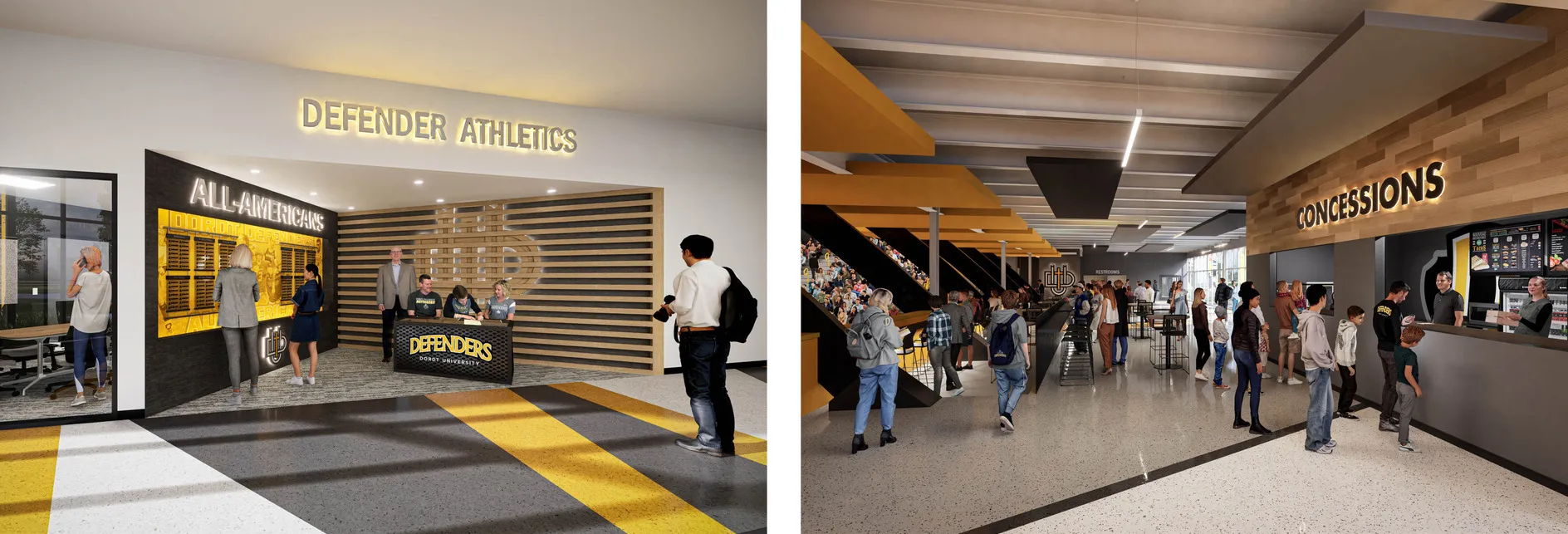
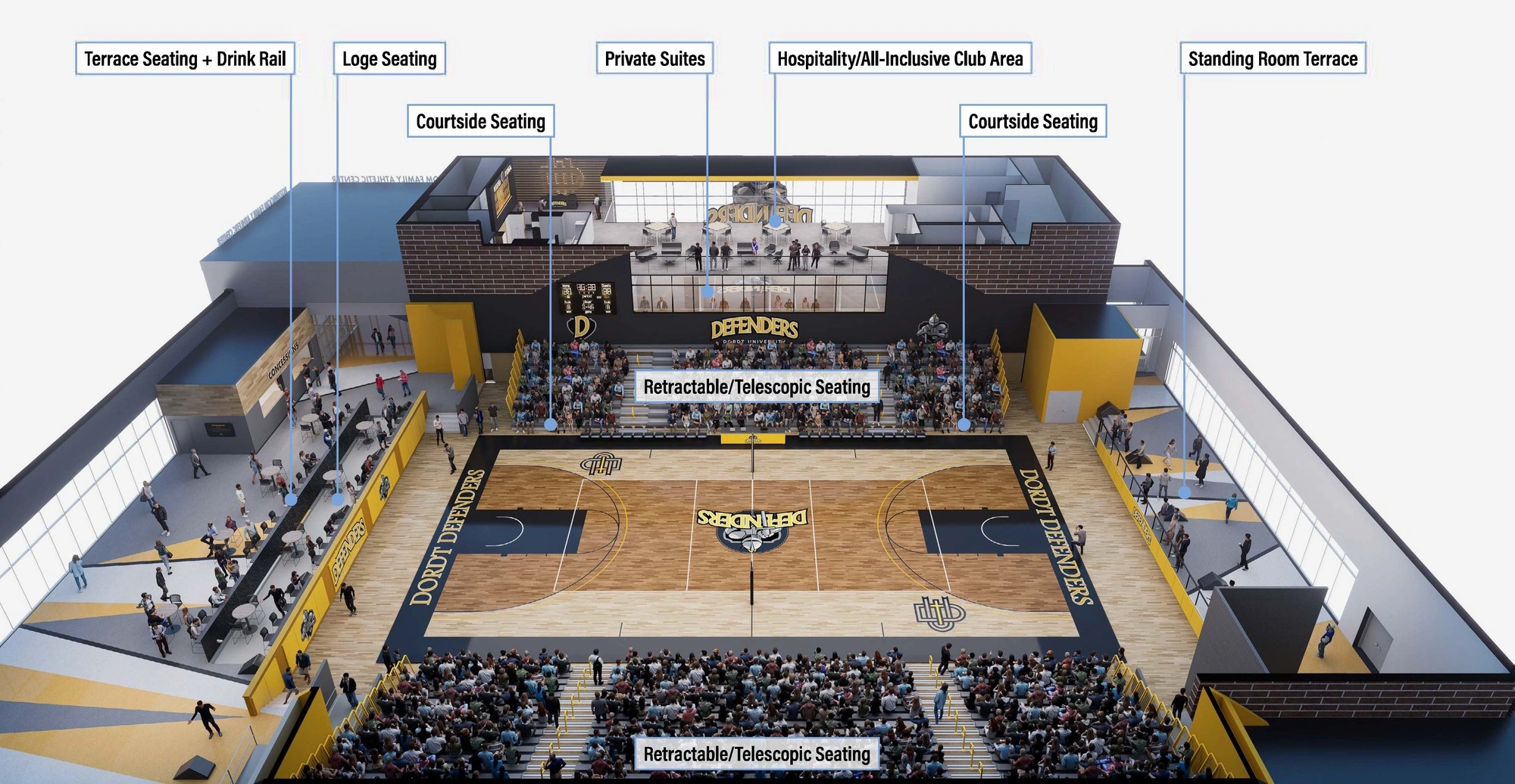
As one of the first buildings encountered when entering campus, the Rozenboom Family Athletic Center plays a significant role in how Dordt presents itself to prospective students, families, and visitors. The design response elevates that first impression while remaining aligned with the university’s values. Material choices, transparency, and branding elements express pride and tradition in a way that feels authentic and restrained.
The Impact of Phased, Design-Led Approach
For campuses navigating funding constraints, evolving needs, and active facilities, phasing can be a powerful strategy when guided by strong architectural thinking. Each phase of the Rozenboom Family Athletic Center addresses immediate priorities while reinforcing a long-term vision that continues to guide decisions, fundraising, and growth.
Even as future phases remain ahead, the project demonstrates how thoughtful design can do more than respond to change, it can help shape it.